
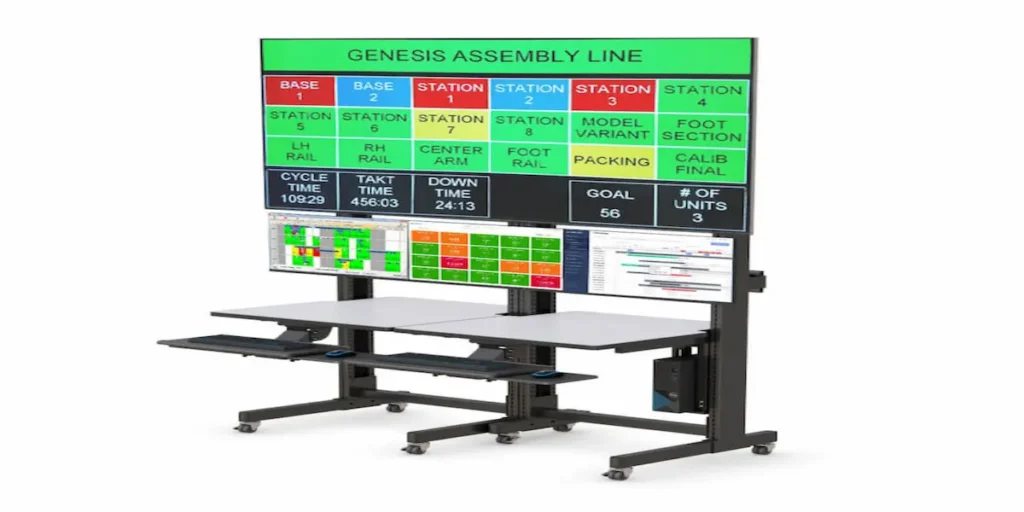
How Do You Choose the Right Industrial Workstation for Your Facility?
Walk onto almost any production floor or warehouse and you’ll spot the same struggle. Someone squeezed a desk into a corner that never fit one. Or a laptop sits on a shelf because there was nowhere else to put it. If you’re reading this, you’ve probably already run into that problem yourself. Maybe you’re setting up a new line, replacing equipment that finally gave out, or trying to fix a layout that’s been “temporary” for two years.
The good news: choosing the right industrial workstation isn’t complicated once you know what to look for. It comes down to three things. How much floor or wall space you have. Whether your team stays in one spot or moves between stations. And what kind of environment the workstation has to survive, whether that’s dust, moisture, constant vibration, or none of the above. Once you know those three answers, the right option usually becomes obvious.
What Types of Industrial Workstations Are Available?
Most industrial setups fall into three broad categories, and each one solves a different problem.
What Is a Wall Mounted Computer Desk Best For?
A wall mounted computer desk is the right call when floor space is tight but you still need a permanent, stable spot to work from. Since it mounts to the wall instead of sitting on the floor, it frees up aisle space and keeps the area beneath it clear for foot traffic, carts, or cleaning. It’s a common choice in facilities where every square foot on the floor already has a job.
What Is an Industrial Workbench Best For?
If your team needs a sturdy surface for assembly, testing, or repair work, an industrial workbench handles that kind of load. The height-adjustable workbench with electronic controls is a good example. It gives you a stable working surface that can shift between sitting and standing height depending on who’s using it or what task is at hand.
What Is a Mobile Cart Workstation Best For?
When your team doesn’t stay in one place, like quality control staff checking multiple stations or maintenance crews moving across a facility, a mobile cart system makes more sense than anything fixed. It lets the workstation travel with the work instead of forcing the work to come to it.
How Do You Decide Which Industrial Workstation Fits Your Space?
This is usually where people get stuck, not because the decision is hard, but because it’s easy to second-guess. Here’s a simpler way to think about it.
Should You Choose a Fixed Desk or a Mobile Setup?
If your team consistently works from the same location, a fixed desk or wall mount will almost always serve you better long term. It’s more stable, easier to route cables and utilities to, and won’t get bumped or repositioned. But if tasks or shifts genuinely require moving between areas, a fixed setup just creates friction. In that case, a mobile cart solves the actual problem instead of fighting it.
Do You Need Height Adjustability?
Height adjustability matters most when more than one person uses the same station, whether across shifts or a shared task. It also matters if the work itself involves switching between sitting and standing throughout the day. The computer workbench with electronic height controls handles that kind of shared, variable use directly. If only one person uses a station and their needs are consistent, a fixed-height option is often simpler and just as effective.
What Do Real Facility Setups Look Like?
Sometimes it helps to see how these options play out in an actual working environment rather than in the abstract.
How Does a Warehouse Floor Use an Industrial Computer Workstation?
On a busy warehouse floor, aisle space is valuable and hard to give up. That’s why many facilities mount their terminals using a ceiling mounted monitor arm instead of a floor-based desk. It keeps the aisle completely clear while still giving staff quick access to a screen and keyboard wherever they need it along the track.
How Does a Cleanroom or Lab Use a Wall Mounted Desk?
Cleanrooms and labs have different priorities. Anything on wheels or with legs on the floor adds one more surface to sanitize and one more thing that could shift or contaminate a controlled space. A wall mounted desk removes that risk entirely. Pairing it with computer cabinets built for controlled environments keeps equipment protected without adding floor clutter.
Frequently Asked Questions
What is the difference between an industrial desk and an industrial workstation?
An industrial desk usually refers to the physical surface itself, while an industrial workstation includes the full setup: the desk or mount, monitor arm, CPU housing, and cable management working together as one system.
Can a wall mounted computer desk hold a full-size CPU?
Yes, most wall mounted computer desks are designed with a CPU holder or nearby cabinet mount so the tower stays off the floor and out of the way while still being easy to access.
How much weight can a mobile cart workstation support?
Weight capacity varies by model, but most mobile carts are built to hold a monitor, keyboard, and full desktop tower comfortably, along with additional accessories depending on the frame.
Are industrial workstations adjustable for standing and sitting?
Many are. Height-adjustable models let one station serve multiple users or shifts comfortably, which is especially useful in facilities running around the clock.
What’s the best workstation option for a small warehouse footprint?
For tight footprints, a wall mounted desk or a ceiling mounted monitor arm on a track system usually works best, since neither takes up floor space that’s needed for movement or storage.