
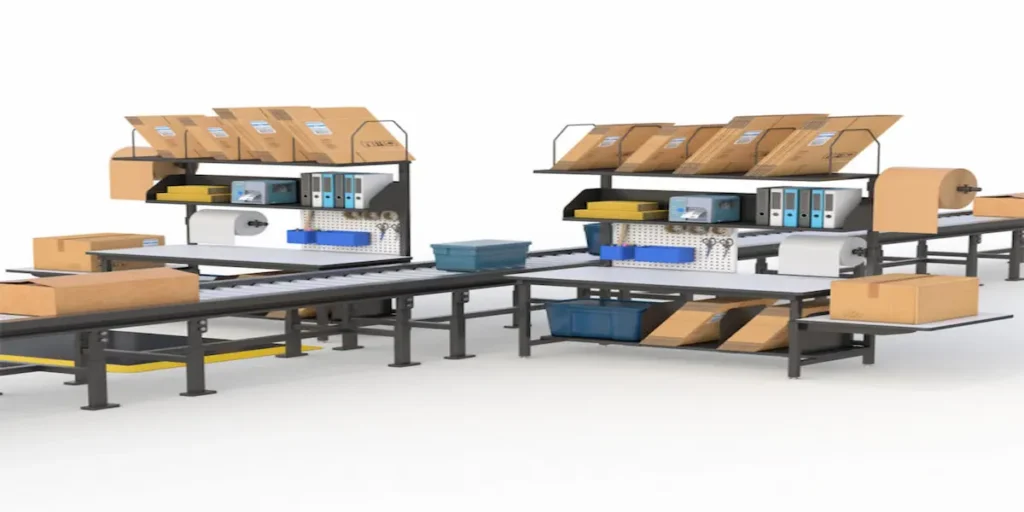
What Should an Industrial Workstation Actually Include?
Most people start looking for an industrial workstation and end up shopping for a desk instead. That’s usually where the frustration starts. A desk alone doesn’t solve the actual problem. A real industrial workstation is a system: a surface, a way to mount the monitor, somewhere for the CPU to live, and a structure that survives the environment it’s placed in.
Are you setting up a station for the first time, or replacing one that never quite worked? Think in terms of the full system rather than a single piece of furniture. Once you know which parts you actually need, the rest of the decision gets much easier.
What Are the Core Components of an Industrial Workstation?
An industrial workstation typically includes four parts working together, not four separate purchases made without a plan.
The surface. This is the base: a desk, workbench, or wall mounted unit that holds the physical workspace. The right one depends on whether the work is light computer use or heavier hands-on tasks.
The monitor mount. This might be a fixed arm, a ceiling mounted monitor arm, or a stand built into the desk itself. It determines how much floor or desk space the screen actually takes up.
The CPU housing. A CPU wall mount or nearby cabinet keeps the tower off the work surface and protected. This matters most in dusty or high-traffic environments.
The environment protection. In facilities with dust, moisture, or temperature swings, computer cabinets built for controlled environments keep the electronics running reliably. An exposed setup won’t last nearly as long.
Do You Need a Fixed Workstation or a Mobile One?
This is usually the first fork in the road. A fixed workstation, built around a wall mounted computer desk or a stationary workbench, makes sense when the same task happens in the same location every day. It’s simpler to wire, easier to secure, and generally costs less over time.
A mobile setup, built around a mobile cart system, makes more sense when the person using it moves between areas throughout their shift. A fixed station forced onto a mobile workflow usually just gets ignored or worked around. That defeats the purpose of buying it in the first place.
How Do You Know If Your Workstation Needs to Be Height-Adjustable?
Does more than one person use the same station, whether across shifts or across different tasks during the day? Then height adjustability stops being optional. A workstation set to one person’s comfort level often causes strain or slowdowns for the next person who uses it.
If one consistent person does consistent work at the station, a fixed height set correctly from the start works just as well and typically costs less.
What Does a Complete Industrial Workstation Look Like in Practice?
In a typical warehouse or production environment, a full workstation might combine an industrial workbench as the base surface, a ceiling mounted monitor arm to keep the screen accessible without adding floor clutter, and a CPU wall mount to get the tower off the surface entirely. None of these pieces do much on their own. Together, they form a station that actually holds up to daily use without getting in the way of the work itself.
Frequently Asked Questions
What’s included in a full industrial workstation setup?
A complete setup typically includes a work surface (desk or bench), a monitor mount, CPU housing, and environmental protection where dust or moisture is a concern.
Is an industrial workstation the same as an industrial desk?
Not quite. A desk is just the surface. A workstation refers to the full system: the desk plus the monitor mount, CPU housing, and any other components working together.
Should my industrial workstation be fixed or mobile?
Choose fixed if the work happens in one consistent location. Choose mobile if the person using it moves between stations or areas during their shift.
Does an industrial workstation need to be height-adjustable?
It’s most useful when the station is shared across multiple people or shifts. For a single consistent user, a properly set fixed height works just as well.
What’s the most space-efficient industrial workstation setup?
Pairing a wall mounted desk or ceiling mounted monitor arm with a CPU wall mount typically clears the most floor space, since neither component needs ground-level footprint.